Full Basement Waterproofing in Omaha, NE
Full basement waterproofing in Omaha, Nebraska usually follows one of two plans: collect water inside where the walls meet the floor and pump it outdoors, or excavate and coat each wall on its outer face. A brief form lets one independent local contractor reach out to you.
Not sure if we cover your area? Check now ↓
Basement Estimate Request
Takes about 30 seconds. One local contractor gets it and contacts you.
Your details go to one independent contractor who works around Omaha, NE, and that contractor gets in touch with you directly. See our Referral Marketing Disclosure.
Why Sealant Alone Rarely Works
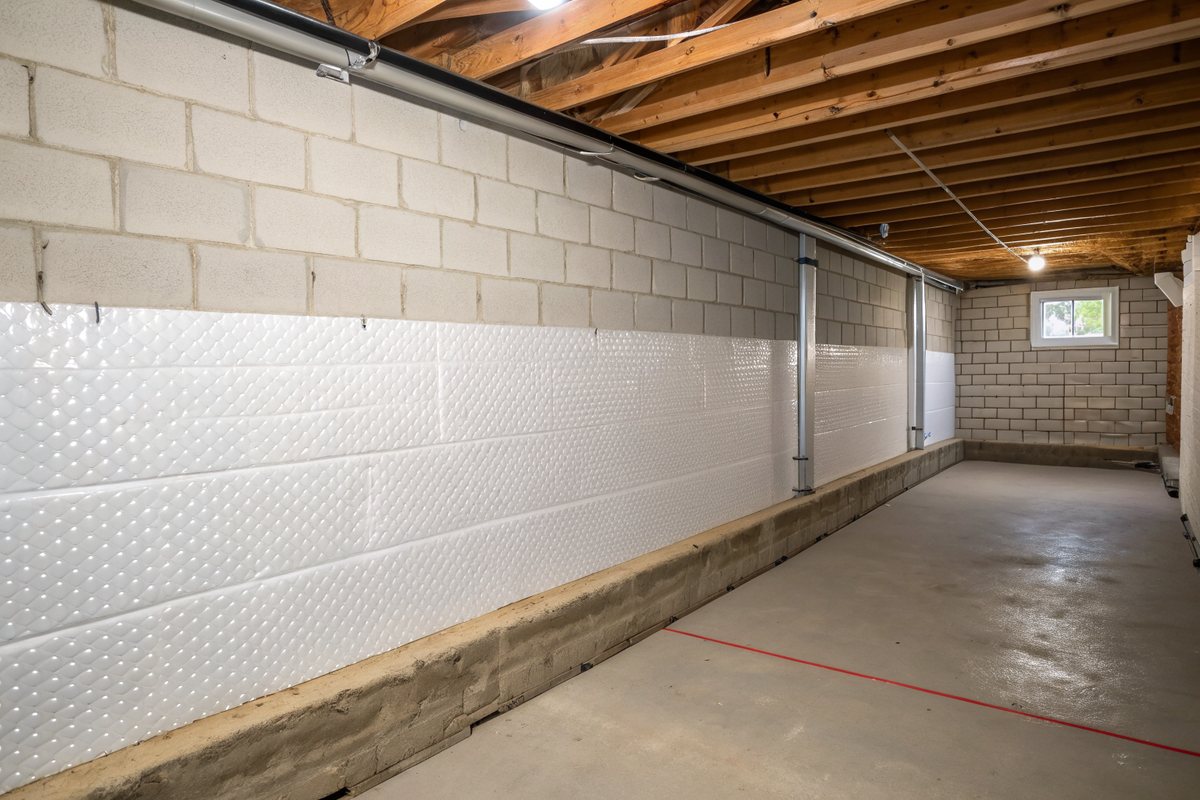
Waterproof paint sits on the room side of a wall, while the water pushes from the soil side. Under days of soaked-ground pressure, moisture creeps behind the film until it blisters or flakes. Paint can help a slightly damp wall; water under pressure needs a path out.
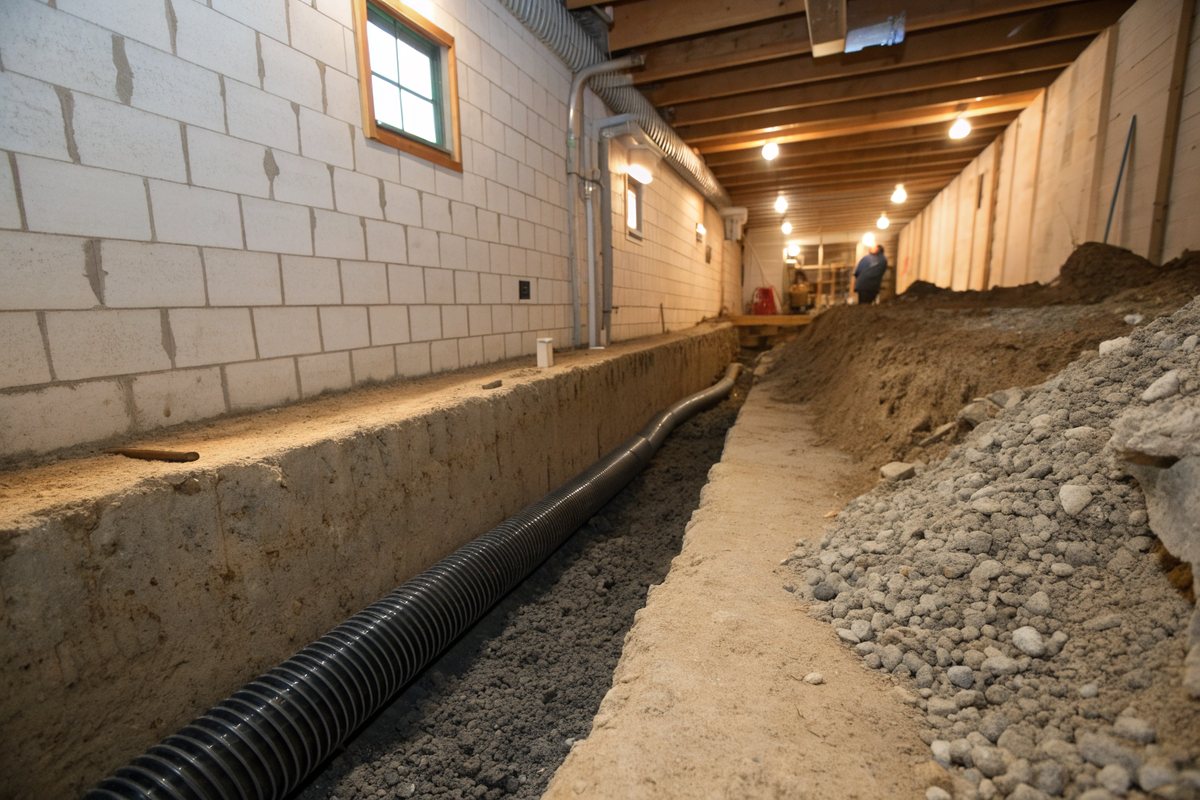
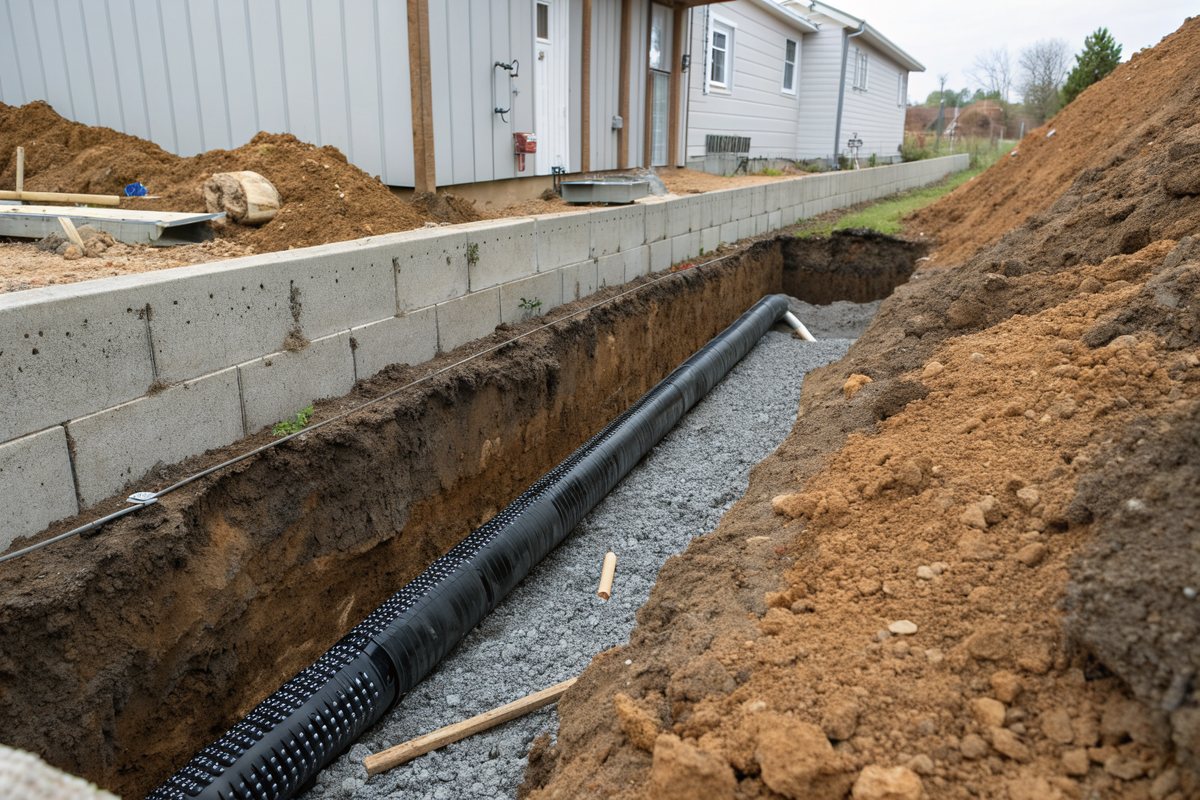
So most full systems rely on drainage. Inside, a channel is cut in the slab beside the walls, perforated pipe goes into gravel, and the run slopes to a lined pit whose pump sends water outdoors. Outside, the soil comes away down to the footing and each wall gets a membrane, often with a drain at its base. That keeps the masonry dry but tears up lawns and walks.
In Census survey data, roughly 18% of Omaha's homes date to 1939 or earlier, around 32% to before 1960 and about 46% to before 1970. Older poured, block, brick or stone foundations can admit water at mortar joints, cracks and the floor seam. Newer homes in Papillion, NE and Bellevue, NE often differ: they went up under later practices, and not every one has a full basement.
USGS maps wind-deposited loess between the area's streams, with clayey glacial till mostly buried beneath it. After a long rain, both can keep a wall wet or shed water unevenly.
Where Full Basement Waterproofing Fits
- Seepage along the floor. Water at the wall-floor seam on several walls usually points to an interior drain feeding a sump.
- No pit at all. A new pit and pump, with a discharge line that ends outdoors and away from the house.
- One soaked wall. Excavating that side for an exterior membrane may make more sense.
- Muggy summer air. A vapor barrier and a dehumidifier deal with moisture a drain never touches.
Typical Price Ranges
| Cost row | Figure | Source (year) |
|---|---|---|
| Typical basement waterproofing project | about $3,000 to $10,000 (average about $5,000) | Fixr national (2026) |
| Interior perimeter drain, per linear foot | $40 to $120 | Fixr national (2026) |
| Sump pump installation | $600 to $2,500 | Fixr national (2026) |
| Epoxy crack injection, per crack | $250 to $1,000 | Fixr national (2026) |
| Waterproof paint or sealant, per sq ft | $1 to $8 | Fixr national (2026) |
No Nebraska or Omaha cost source exists, so every row is national, and none is a price from this site. On a full system, the feet of drain usually set the total; the cost calculator gives a rough range for your basement.
The Typical Job, in Order
- A look around. Contractors typically note where water appears, the wall material, the yard's slope and where downspouts empty.
- A written plan. Which walls get drain, how many feet, the pump model and where its discharge line exits.
- Permits first. In Omaha, digging, foundation or structural work may need a City building permit, while plumbing or sewer work needs its own permit through an Omaha-licensed plumber or sewer layer. Before starting, the contractor confirms with Permits & Inspections, (402) 444-5350; nearby towns run their own offices.
Pump water should land outdoors, clear of the foundation and the neighbors; a floor drain, laundry tub or sewer line is the wrong place for it. Ask a licensed plumber or the City where yours belongs.
Less Hassle, Clearer Answers
Reading here is free, and the form brings contact from one independent local contractor only when you want it. This site is a referral and advertising service, not a contractor or plumber; it never visits, prices or signs anything. Contractors may pay a flat fee to advertise, though a trial waives it for now, and you neither pay nor receive anything.
Nebraska's Attorney General advises a written contract, a reasonable down payment and the balance only once the work is finished. A solid contract shows:
- Who does it. The contractor's name, address and contact details.
- What gets done. Walls included, feet of drain, pump details, discharge point and materials.
- Price and finish. The total cost and the date the job will be complete.
- Warranty and permits. Written warranty terms, whether they transfer to a buyer, and who pulls each permit.
Frequently Asked Questions
Is an inside drain or an outside membrane better?
Neither wins every time. An interior drain handles water once it reaches the wall and is usually less disruptive. An exterior membrane stops water on the soil side but means digging along the foundation. Ask why one suits your walls and lot.
Will a waterproofing system stop water coming up a floor drain?
No. That is a sewer backup rather than seepage. Omaha addresses report backups to the City at 402-444-5332, and nearby towns use their own sewer offices. Whether a backwater valve makes sense for the house is a question for a licensed plumber.
More Ways to Keep Water Out
A single damp patch may call for basement leak repair or foundation crack repair; see also sump pump installation and basement drainage.
Start Your Waterproofing Request
Jot down the damp walls and the weather that brings water in. Once the form is in, one independent local contractor gets in touch, sees the basement and prepares an estimate. Any work is between you and that contractor, and nobody can promise a dry basement. The form below is the place to begin.